
As part of the Eco Club Projects, FabLab Cuenca has hosted a series of hands-on workshops designed to bring together digital fabrication, environmental education and citizen creativity. One of our most impactful activities has been the design and construction of bird houses, an initiative that supports local biodiversity.
From design thinking to nesting spaces
The birdhouse workshop at FabLab Cuenca is far more than a simple crafting session; it’s the product of a thoughtful, collaborative process. Using design thinking techniques, we first identified the needs of local bird species and the interests of the community. We secured essential support from experts connected to the Mammalnet community a European partnership dedicated to citizen-science wildlife research to gather the practical knowledge needed. This ensured each design was safe, functional, and perfectly suited for the Cuenca region.
This research then guided our development of prototypes using digital tools like parametric modeling, CNC milling, and laser cutting. These designs were subsequently tested, adapted, and finalized through group sessions that encouraged creativity and collective problem-solving.
A collective effort
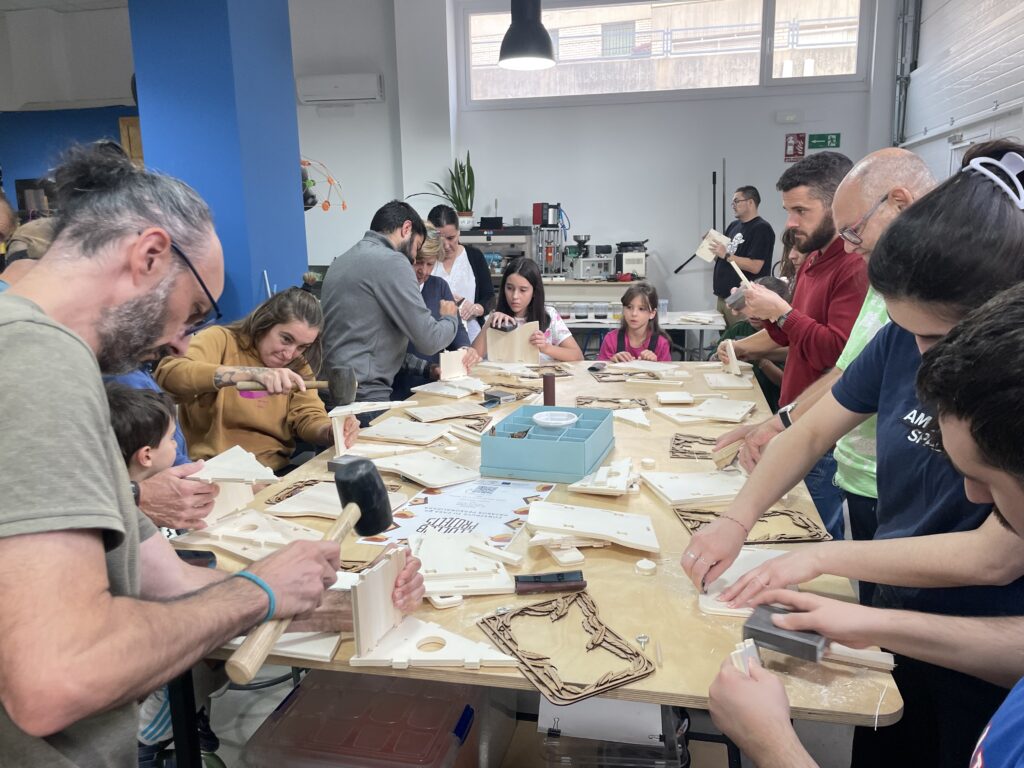
The results speak for themselves: together with our community, we’ve built over 60 unique birdhouses, each one reflecting the creativity of its maker. Every participant, from children to seniors, had the opportunity to assemble, decorate, and take home a personalized nest box contributing directly to the protection of local wildlife.
What happens in a workshop?
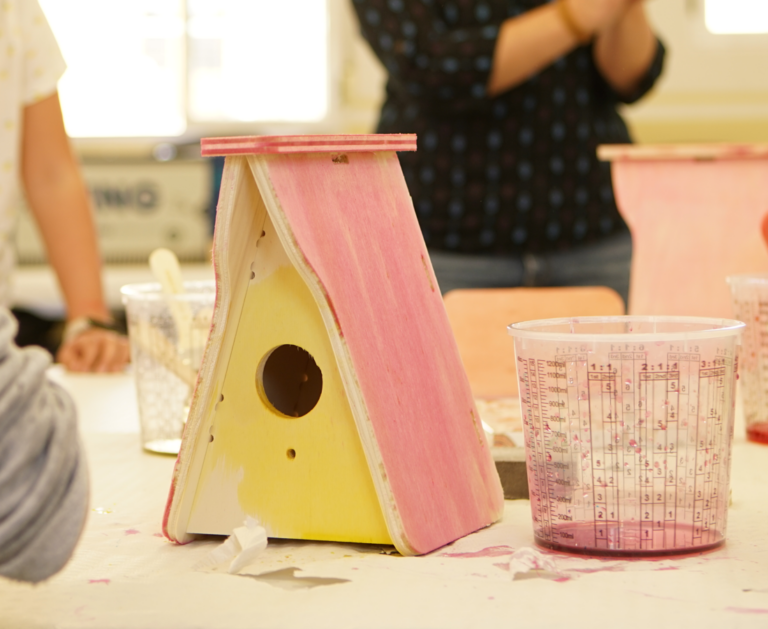
In each workshop, participants are welcomed into a creative, hands-on environment where they receive an introduction to the birdhouse design and its purpose. Using pre-cut wooden parts and basic tools and natural ingredients like cordless drills, mallets and natural inks, each person assembles their own birdhouse while learning practical building skills. Once assembled, the houses are decorated using tints and natural finishes, allowing for personal expression and added protection. The session concludes with guidance on how to install the birdhouse correctly considering height, orientation and safety followed by tips on what species might visit and how to observe them respectfully. The result is a beautiful, functional refuge for local birds, a sense of pride and connection for every participant.
Going further: open knowledge & smart monitoring
We’ve also integrated open-source monitoring tools into our design process. With simple, affordable technologies like the ESP32 CAM module, participants can follow a guide and tutorial to install cameras in their birdhouses to observe nesting behavior remotely. All guides, code samples, and wiring diagrams are shared as open educational resources.
Want to build your own?Download the building [guide]
Learn how to install a DIY wildlife camera [Instructions]